
PEOPLE WITH THEIR OWN PATH
Beyond ATLAS
Away from ATLAS, Leo joins a theatre workshop and meets Vera. At ARGOS, another team is trying to keep its models and contracts going. Back at home, colleagues still have to agree about a table, a sofa or noise. These introductions help you place those people and settings.
An introduction to the people and settings of Book 1. Resolutions belong to the story and to the plot map with its spoiler warning.
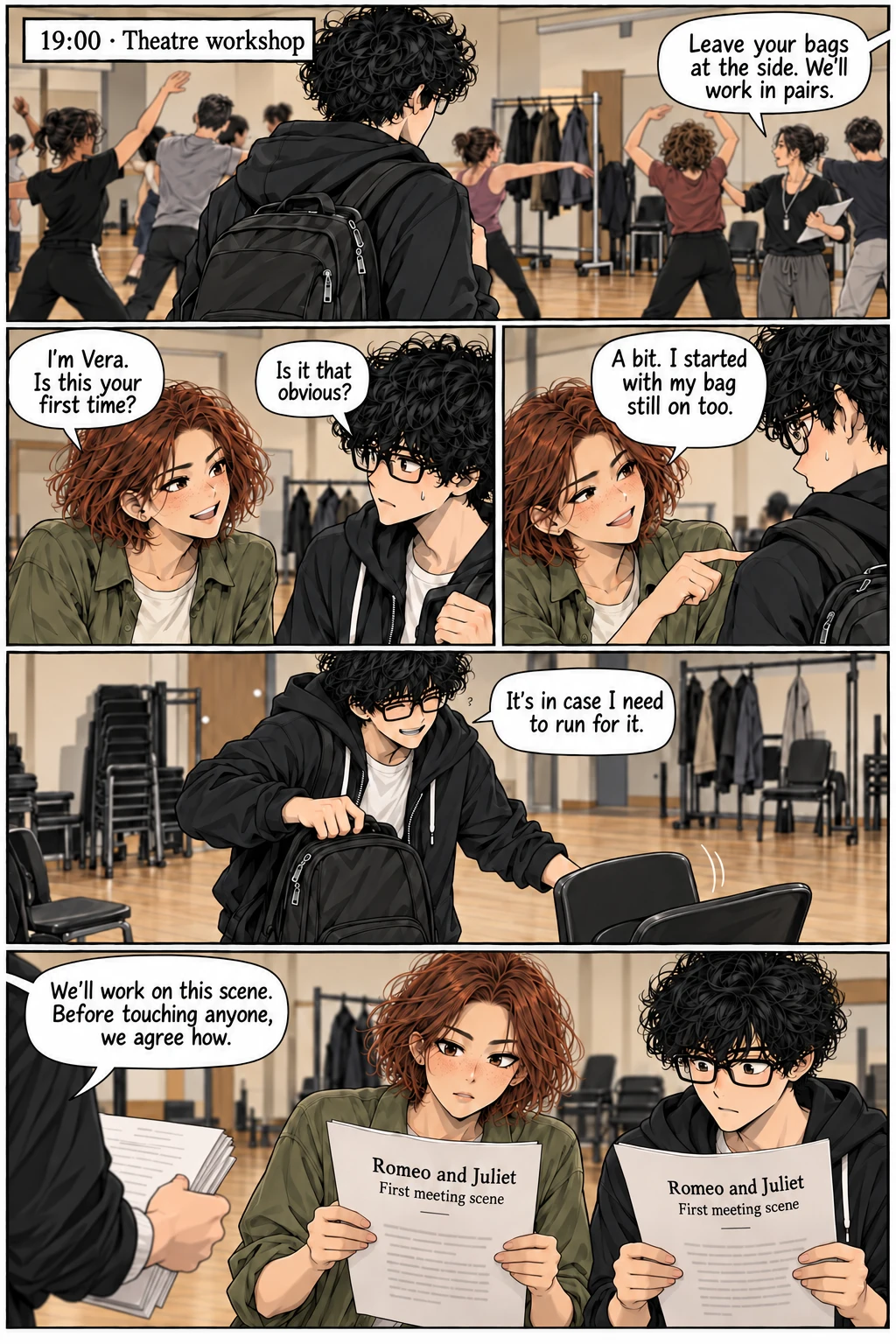
Vera · A fellow theatre participant
Vera welcomes Leo to the theatre workshop while he is still wearing his rucksack. She introduces herself, recognises the discomfort of arriving for the first time and responds with humour. She offers to work with him as a fellow participant: there is a scene, another person to listen to and something to try to achieve through movement and voice.
She has a performance to prepare and already knows Mara. The group, the script and making use of rehearsal time matter to her. She can joke with Leo and then ask him to pay attention to the exercise. Before rehearsing the kiss, they agree whether there will be contact and how to perform it.
Leo’s ease at remembering other people’s lines is useful in rehearsal. He can still miss his cue or struggle to position himself. Vera appreciates what he brings and also asks him to look, wait and listen. Understanding what happens between them means following how they treat one another inside and outside the workshop.
Damián · The models at ARGOS
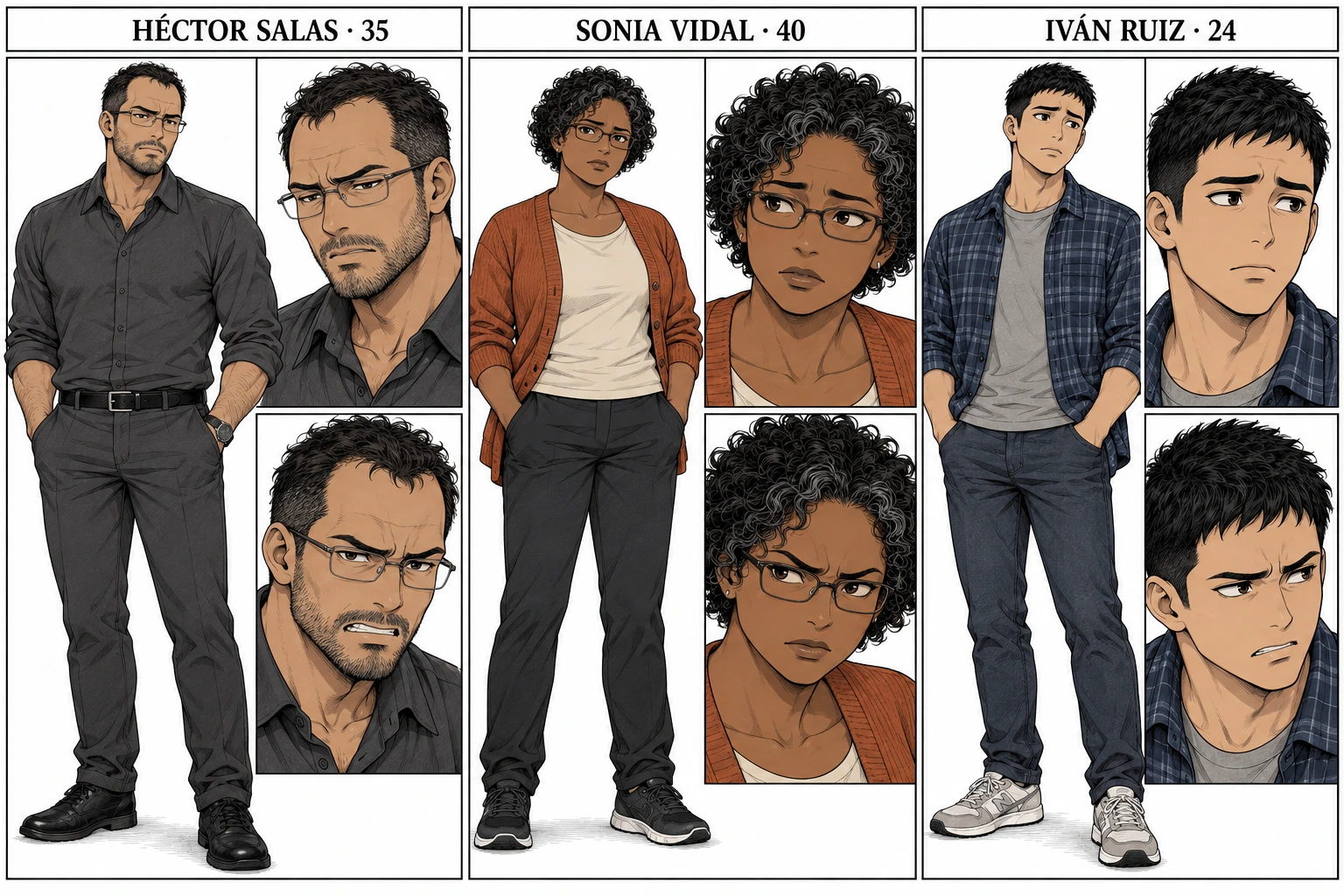
Damián coordinates the models at ARGOS, the other university team funded by Nexo. Leo first encounters him as a rival offering to show results. Work supports that confidence: ARGOS knows how to develop models and compare them. ATLAS has to take that work seriously when deciding what it needs to improve.
He works with Iván and needs the reservations Sonia organises. Taking a version to assessment also requires knowing about the agreements and documents Héctor manages. A model result can be ready while a question about its conditions of use remains.
He wants to continue his research direction and defend what he presents. That is why he asks about permissions for the material and what the team signs. The answer affects his work and Iván’s; he needs something he can check, alongside whatever trust he has in Héctor.
Sonia · Bookings and continuity
Sonia looks after ARGOS’s infrastructure. While others discuss which result to present, she needs to know which machines can be booked and for how long. She uses that information to organise runs. A promise of funding does not yet tell her which slots she can offer.
The project’s continuity affects her contract. That is why she asks Héctor what she can commit for November and explains the available slots to Damián. If she does not know which resources will remain available, she cannot confirm the bookings they want.
Sonia listens to claims made on behalf of ARGOS and asks the people making decisions. Meanwhile, she has to organise her work and know what will happen to her job. Her questions reveal how much depends on answers she cannot provide herself.
Iván · His model and placement
Iván is a student researcher at ARGOS. He works on a model of his own, checks connections and shares desks with people who decide on resources and partnerships. When he asks about his placement, he means his continuity through the academic year and a promise he needs to know whether he can trust.
His technical work has value through what he has actually built. It also depends on permissions, funding and decisions he does not make alone. Damián can guide part of the research; Héctor speaks about the project’s future and Sonia knows the limits of the machines. Iván needs to understand how those answers fit together.
He asks whether they can keep working and what will happen to his model. He has spent time developing it and needs to know whether he can continue through the academic year. Discussions about permissions or funding reach right down to a placement and work he has spent hours on.
Héctor · Projects and funding
Héctor manages ARGOS’s projects and partnerships. His role connects the laboratory’s work with those who might fund it: preparing a submission, maintaining a collaboration and answering for commitments. He occupies a different position from Damián, who coordinates models, and Sonia, who organises infrastructure.
He wants to keep the project going and needs results to support a request for continued funding. Sonia asks about her contract and Iván about his placement. Both need to organise the coming months; knowing which part of the offer is already agreed matters to them.
Agreements follow one timetable, while technical checks may need another. Damián asks about permissions for the material and Héctor must answer for the documents he manages. Presenting a possibility as settled also commits the work the others are preparing.
Rehearsing and moving
The municipal theatre workshop has a wooden floor, chairs pushed aside and adults warming up. Leo and Vera rehearse Romeo and Juliet. They agree on movements and stage contact; listening, waiting for a cue and responding to a partner are part of the work. A stage kiss does not explain what someone feels outside rehearsal.
The gym is a different activity and place. Leo needs guidance on movement and load, repetition and correction. With practice he can sustain a little more effort while still getting tired; the instructor and the group are part of that experience. In theatre he remembers the text easily, but still has to attend to another person and move his body within the scene.
ARGOS · Another laboratory, different responsibilities
ARGOS works in the old wing of a university building: pale brick, tall translucent windows, metal desks in a U shape and servers behind glass. Workstations, a computing bench and people busy with different tasks give it an identity of its own alongside ATLAS.
There are models to develop, reservations to organise and commitments to explain. Nexo funds both teams within a competition open to participants worldwide. Sharing a funder does not turn the challenge into an exclusive contest between two groups. Within ARGOS, people also make different decisions and do not know every conversation their colleagues have.
Homes have other uses
Leo’s rented room is part of a shared flat; his desk does not occupy the whole home. Jun’s home is a separate place, with a table, music and a need for rest. The sofa he offers Nico requires a conversation about dates, costs and noise, alongside gratitude for the help.
A table needed for rehearsal may be occupied by boxes or laptops. Searching for a room, working out the rent and allowing for travel take time, even with a friend helping. Nico and Jun have to discuss those details so the favour fits into the home where one already lives.
Relationships that shape everyday life
Vera and Leo
They rehearse Romeo and Juliet. Leo’s memory helps with the text; waiting for a cue and moving together require other work. Outside rehearsal they have to clarify what they want from one another’s company, without assuming that working together means the same thing to both.
Vera and Mara
Mara was already Vera’s friend before Leo joined the workshop. Their friendship has conversations and shared time of its own.
Models and partnerships
Damián needs to know which permissions apply to his work. Héctor manages the agreements and has to answer that question.
Infrastructure and continuity
Sonia needs to organise bookings and Iván wants to know whether his placement continues. Answers about continuity affect them both.
Sharing a roof and keeping a home
Jun offers Nico a sofa. They then need to agree how long for, how to share costs and what happens about noise or the table.
Two teams in a worldwide challenge
Nexo funds both teams and compares them through a shared internal evaluation. They also compete internationally with all the other entrants; their private comparison is not the worldwide ranking.