Results and questions
Evaluation room
Before accepting a score, there are a few questions to answer.
- Where we are
- At the north-east end of the ATLAS floor, connected to the shared area.
- What it feels like
- Neutral light, fewer personal objects and a clock visible throughout the questions.
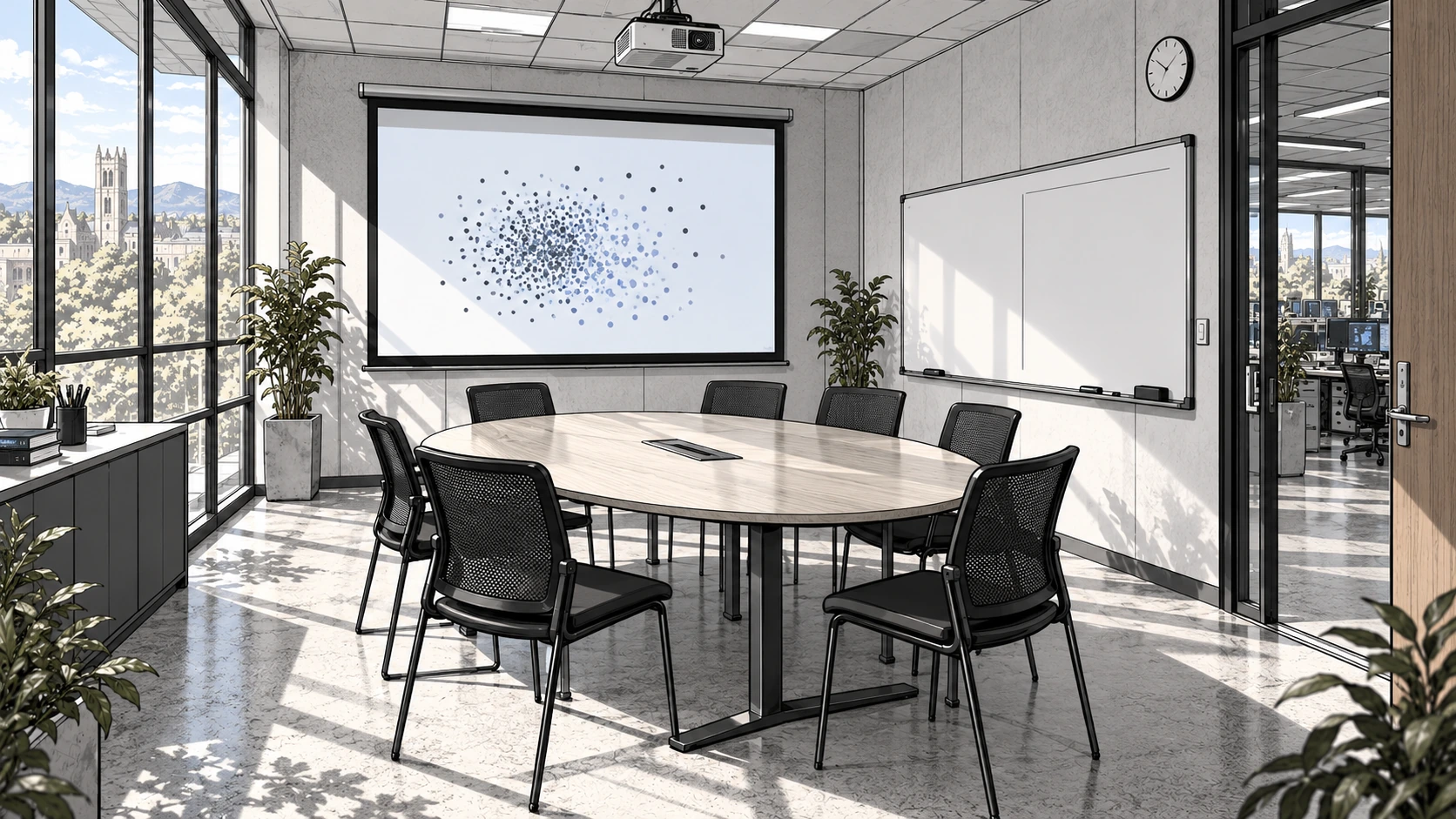
The meeting table and large screen bring together parts of a task that are seen separately at the desks. This room at ATLAS serves internal reviews and progress meetings. Here, people have to explain what works, what is still being investigated and which resources they need to continue.
What is here
- An oval table and a large screen for sharing results.
- A wall clock and light-coloured acoustic panels.
- A whiteboard separating what has been checked from what is still pending.
The same table, different positions
The presenter decides where an explanation begins. The reviewer can stop it with a question. Whoever prepared a run needs what is shown to correspond to their work. Seating and turns to speak make those differences visible. A meeting does not remove the division of responsibility: it puts it in front of other people.
Alicia and Nadia look beyond the slide
Alicia coordinates and validates results; she needs to know which claim they support. Nadia contributes experimental design and its limits during her allocated time on the project. Both may find a question that an impressive number leaves out. Their work helps distinguish a useful advance from a hasty interpretation, even when the presentation is already prepared.
Showing the actual work
Jun can explain how a system was run, and Leo must be able to say which part he did. A screenshot preserves a moment; repeating the work checks something different. The whiteboard and documents make room for limitations alongside results. Acknowledging that something is still pending allows people to discuss what is needed to resolve it, rather than hiding it behind a demonstration.
From an explanation to a commitment
Questions about time and resources can change the team’s scope. Inés then has to carry those changes into its commitments to Nexo Salud Digital, a fictional research software company providing funding and an internal assessment. That follow-up has its own timetable. The answers to the real challenge still need preparing and submitting; a good meeting does not do that work.
Who spends time here

Data Analyst · analysis and validation
Alicia Valcárcel ↗
She analyses, coordinates and tries to hide when she is uncertain.

Data Scientist · evaluation methodology
Nadia Vidal ↗
She divides her working time between two projects and needs well-prepared questions.

Scientific direction and laboratory leadership
Inés Valdés ↗
Funding, deadlines and priorities all end up on her desk.

MLOps · runs, resources and agents
Jun Park Etxeberria ↗
He wants the system to work and the working day to have an end.

Machine Learning Engineer · models and tools
Leo Martín ↗
He arrives at ATLAS with plenty of ideas and an eye on what others think of him.